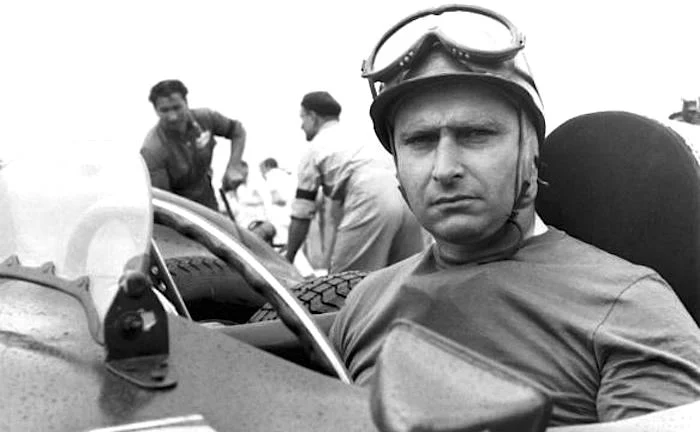
The story of Formula 1 begins not on a race track, but in the ruins of post-war Europe. As the world rebuilt itself after the devastation of the Second World War, a hunger for speed, competition, and spectacle emerged from the rubble. Motorsport had existed for decades in various forms — the great European Grands Prix of the 1920s and 1930s had produced heroes like Tazio Nuvolari, Rudolf Caracciola, and the legendary Silver Arrows of Mercedes-Benz and Auto Union. But these were fragmented events, each with their own rules and their own champions. There was no single, unified world championship.
It was the Fédération Internationale de l'Automobile (FIA) that changed everything. In 1946, the FIA established a set of technical regulations — a "formula" — to govern the construction and performance of Grand Prix racing cars. A car that met these regulations was eligible to compete in what would become the sport's highest category. The word "Formula" referred to these rules, and the number "One" signified the top tier. Below it would eventually come Formula 2 and Formula 3, the development ladders that feed talent into the pinnacle of motorsport to this day.
On 13 May 1950, the very first round of the FIA Formula One World Championship was held at Silverstone Circuit in England. King George VI and Queen Elizabeth were among the 100,000 spectators who lined the old wartime airfield. An Italian in a blood-red Alfa Romeo 158 — the great Giuseppe "Nino" Farina — crossed the line first, and the sport was born. Farina would go on to win that inaugural championship, though he was pushed hard by his legendary compatriot Juan Manuel Fangio.
In those early years, Formula 1 was a profoundly different world. Drivers wore cloth helmets and linen overalls with almost no fire protection. Circuits were lined not with barriers and gravel traps, but with hay bales and spectators standing just feet from the track. Death was an accepted, if never welcomed, companion to the sport. Between 1950 and the mid-1970s, dozens of drivers lost their lives in competition, including legends such as Alberto Ascari, Wolfgang von Trips, Jim Clark, and Jochen Rindt — the only world champion ever crowned posthumously.
The British Racing Motor (BRM), the privately entered Ferraris, the Vanwalls, the Lotuses — through the 1950s and 60s, the sport was driven by a peculiar mix of passion, madness, engineering genius, and reckless courage. Enzo Ferrari built his cars with obsessive devotion to speed and a complete disregard for driver safety — a philosophy that earned him equal measures of reverence and condemnation. Colin Chapman at Lotus was an aeronautical engineer who treated racing cars as experiments, introducing radical concepts that would define the sport for generations.
It was not until the brave campaigning of drivers like Jackie Stewart in the 1960s and 70s that the sport began to take safety seriously. Stewart, three-time world champion, lobbied furiously for better medical facilities at circuits, armco barriers, and improved car structures. His advocacy — made at great personal and professional cost — saved countless lives and transformed Formula 1 from a death sport into a genuinely competitive spectacle. The sport had moved far from its improvised origins, and it would never stop moving forward.
"To achieve anything in this game, you must be prepared to dabble in the boundary of disaster." — Stirling Moss, regarded as the greatest driver never to win the World Championship.